Poland Tribunal
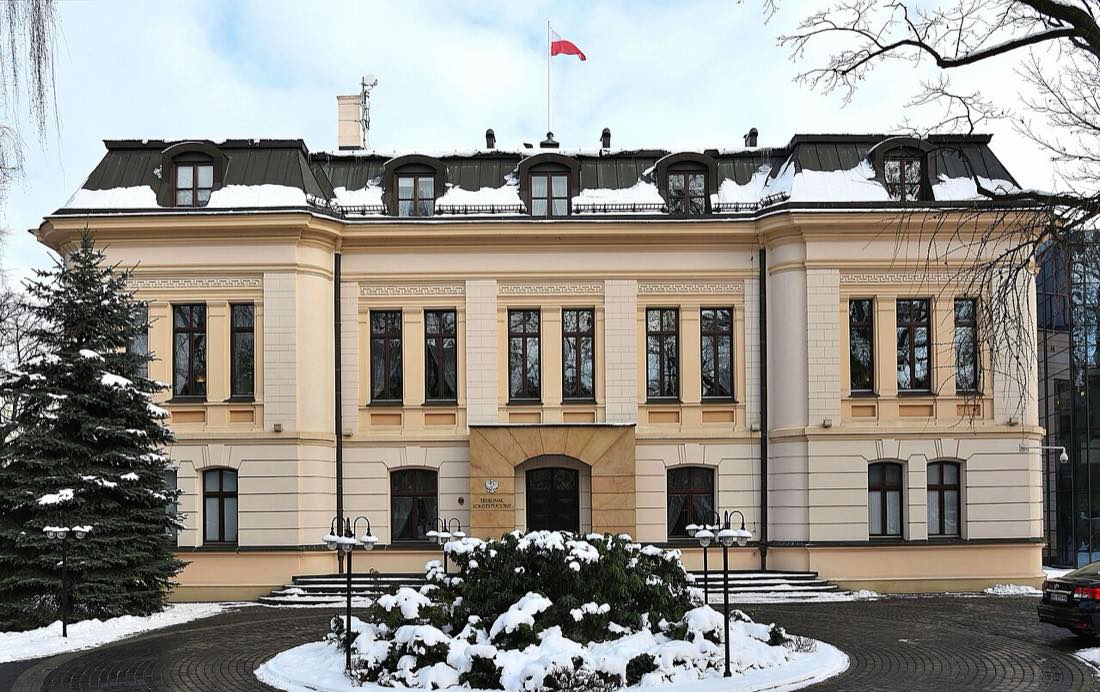

Is a coup underway in Poland?
- What’s happening: Poland’s elected government and its president, who come from rival camps, are fighting over who controls the country’s constitutional court.
- What’s really at stake: whether Poland stays bound by EU law, and in the long run whether it stays in the EU. Tusk’s government says EU law and European court rulings bind Poland, including a December 2025 ruling that the Tribunal is not an independent court (CJEU). PiS and the Tribunal it shaped reject that: in 2021 the Tribunal ruled that parts of the EU treaties conflict with Poland’s constitution (Guardian). Tusk: “I will not let the right lead us out of the European Union. That is what’s at stake today” (X).
- The flashpoint: on Oct. 30 a judge backed by the government suspended the court’s chief; police kept him out. Overnight the president pushed his way into the building. Each side calls the other’s move a coup.
- Why Americans are hearing about it: US right-wing accounts are retelling it as a “globalist coup” and a preview of claims about US elections.
- Where Moscow stands: Tusk’s government is staking this fight on EU law, European courts and Poland’s place in a democratic Europe. Lined up on the other side, behind PiS and the president, are Kremlin voices and Europe’s far-right networks. Former Russian president Dmitry Medvedev calls it “a constitutional coup” by “Brussels’ foster-child Tusk”; the ideologue Alexander Dugin wishes “luck and success to Polish right”; Viktor Orbán’s camp, the Patriots for Europe group and US MAGA accounts call it a coup or a “power grab” (who says what). That makes Poland, NATO’s front-line state and Ukraine’s main supply route, a front line in Russia’s hybrid war on Europe (our hybrid-war tracker).
- Our read: this is not a coup. It is a bitter, now physical fight over one court, and over Poland’s place in Europe, not a seizure of the country.
American and Russia-aligned accounts are presenting this fight as a preview of what is coming to the United States, ahead of the Nov. 3 midterms. If you see Poland cited as proof about US elections, start with what actually happened here.
Each side calls the other’s move a coup. Nothing shows a wider seizure of state power: the fight is over one court. Next: Saturday, when the suspended chief’s judges say they will return, and the judges’ Nov. 3 assembly.
What would change this rating ↓
polandtribunal.america2.newsGet America 2.0 in your inbox
Analysis of Russian influence, information warfare and the networks behind them. Free; unsubscribe anytime.
Latest reports
New reporting from major outlets and official sources, listed as it appears. Our monitoring adds headlines from major outlets automatically. "Checked" means our software fetched the full report and confirmed it supports its headline. "Reviewed" means an editor checked it against its source. "Auto" items have not been checked yet. Tap a label for our note. None of this is an endorsement. Our assessment is the rating above.
- „Wydaję wam takie polecenie”. Bogdan Święczkowski domagał się wpuszczenia do Trybunału (Euronews.com)
reviewed ▾
An editor checked this report against its source. - Tusk broni zmian w Trybunale Konstytucyjnym w obliczu trwającego sporu (BBC)
reviewed ▾
An editor checked this report against its source. - Byli prezesi Trybunału zabrali głos: "Nie istnieje inna droga" (Euronews.com)
reviewed ▾
An editor checked this report against its source. - Komisja Europejska zabrała głos ws. Trybunału Konstytucyjnego (Euronews.com)
reviewed ▾
An editor checked this report against its source. - Spór o Trybunał Konstytucyjny. Tusk ma sojusznika w Brukseli. "Znaczenie dla każdego polskiego obywatela" (Wiadomości Onet)
auto ▾
Not checked yet. Listed automatically because it comes from a major outlet or official source. - Poland’s Tusk strikes defiant tone over court clash, vows rule of law (Euronews.com)
reviewed ▾
An editor checked this report against its source. - Polish president accuses Tusk of forced takeover of country's top court (USA Today)
reviewed ▾
An editor checked this report against its source. - Tusk accused of constitutional court takeover by Poland’s president (The Telegraph)
reviewed ▾
An editor checked this report against its source. - Tusk defends overhaul of Poland’s constitutional court despite protests (The Guardian)
reviewed ▾
An editor checked this report against its source. - Poland’s Tusk Says He Won’t Back Down in Top Court Standoff (Bloomberg)
reviewed ▾
An editor checked this report against its source.
What happened
The short version first. Open “Details and sources” for the full record.
- Nov. 1: the suspended Tribunal president returns to the protest. Święczkowski appeared among protesters outside the court on Sunday morning. “I am the president of the Constitutional Tribunal. No one has dismissed me from this post,” he said, adding that he would come every day. On Saturday evening Korwin-Piotrowska said that he and his deputy, Bartłomiej Sochański, may not enter the building. She also said other judges must arrange access with her in advance, citing safety (BBC).
- Nov. 1: the police union asks for answers; the police chief says the operation was lawful. In an open letter on Oct. 31, the police union Policyjna Solidarność asked national police chief Marek Boroń to say publicly where the force stands. It cited officers’ legal doubts about the operation at the Tribunal and their fear of criminal liability. Boroń replied that the police actions were fully lawful and that it is not the police’s role to judge how the Tribunal works (RMF24, WP).
- Oct. 31: Tusk vows to protect the court and blames “pro-Russian forces.” In a televised address, Tusk called the attack on the Tribunal and its judges another stage in the destruction of the rule of law by PiS and Presidents Duda and Nawrocki. “Shouting, lies and brawling cannot be a source of law in Poland,” he said, promising to keep the court safe so it can work “independently, also of me.”
Details and sources
He named “politicians and activists from PiS and Konfederacja, from Braun to Bąkiewicz”; said those trying to destroy democracy “find support among pro-Russian forces” and, in this conflict, “an army of Russian bots on the internet”; and asked whether their motive is “greed, stupidity or treason,” adding that “the effect is the same.” He cited no evidence for the bot claim and announced no new measures. On the president’s confrontation with the judges: “a judge, even a petite woman, does not give way to an aggressive thug” (WP, Onet).
- Oct. 31: the European Commission says appointing the judges is the Sejm’s call. A Commission spokesperson told Euronews that appointing eight new Tribunal members “falls within the constitutional competences of the Sejm,” and that it is up to Polish authorities to let the Tribunal work under the constitution and EU court rulings (Euronews). The spokesperson pointed to a May order by the European Court of Human Rights telling Poland not to hinder the four judges the president refused to swear in. The Tribunal said in May that Strasbourg has no authority over Poland’s constitutional structure (Notes from Poland). The European Parliament group that includes PiS, the European Conservatives and Reformers, condemned the government and sided with Nawrocki.
- Oct. 31: Tusk’s partners split over the president’s talks. Two junior partners in Tusk’s coalition, Szymon Hołownia’s Polska 2050 and Deputy Prime Minister Władysław Kosiniak-Kamysz’s PSL, say they will attend Nawrocki’s crisis consultations on Saturday afternoon; the Left says it will not. Hołownia criticized Święczkowski and the PiS-nominated judges, but said the night’s events “bring shame on Poland” and that fixing the court “by force” would only “exacerbate its downfall.”
Details and sources
The Left’s caucus head, Anna-Maria Żukowska, said the party would not accept an invitation “from someone who is himself responsible for the current situation.” Justice Minister Waldemar Żurek told TVN he supports Korwin-Piotrowska’s actions, called the president’s behavior “shameful,” and said he hoped prosecutors would act (Notes from Poland).
- Oct. 31: the opposition moves to replace the government through parliament. Former prime minister Mateusz Morawiecki, whose party Rozwój Plus split from PiS, proposed a constructive no-confidence vote, which replaces the government with a named new prime minister. His candidate is former Sejm speaker Marek Jurek, to serve until the 2027 election. On current seat counts the opposition is about 24 votes short of the 231 needed.
Details and sources
Morawiecki said the interim prime minister’s job would be to calm the situation and hold “fair elections” in 2027, and called Jurek’s name “our proposal, of course open to discussion.” He also said he has “very serious doubts” that the government will allow lawful elections on time; he offered no evidence (Polsat News). By the Sejm’s own club counts, PiS (147), Rozwój Plus (40) and Konfederacja (20) hold 207 of 460 seats, so the motion needs votes from the governing coalition to pass (Sejm).
- Oct. 31: the judge sends staff home; an armed man is detained outside. Korwin-Piotrowska ordered most Tribunal employees to stay away from the building, on full pay, and told judges to work elsewhere, citing a heightened risk to public order. Around 11 a.m., police detained a masked 30-year-old at the protest outside after he struck a woman organizer who asked him to remove his mask; police say he carried a knife, a BB pistol and a ‘Security’ badge resembling a police one.
Details and sources
The order, issued Saturday and in force until revoked, also limits the Tribunal’s offices to tasks she assigns, closes its mailroom (letters must come by post), and revokes earlier authorizations to stand in for the court’s president; employees called in must use entrances announced on the Tribunal’s website. The site also says the X account @nowyTK_GOV_P does not speak for the Tribunal. Święczkowski told Polsat News he still regards the events as a coup and hoped the president’s planned talks with party leaders would not escalate tensions (Polsat News).
Police said the man hit the organizer when she asked him to uncover his face, broke free from protesters who tried to hold him, and was caught by officers guarding the protest; they also found drugs on him, and he was taken to a police station (Polsat News).
- Oct. 31: the president forces his way in. Shortly before 1 a.m., President Nawrocki, his security detail and the head of the Supreme Court got around the police line and pushed past judges at the Tribunal’s door. Inside, he told them: “You are not judges.” Each side accuses the other of assault. No injuries have been reported.
Details and sources
Shortly before 1 a.m. on October 31, Nawrocki entered the Tribunal building with Supreme Court head Kapiński, his chief of staff said (PAP). TVP Info reports that he and officers of his protection service went around the police cordon and over a low wall (TVP Info). Video posted by Judge Maciej Berek shows the president pushing between people standing in the doorway, among them judges this parliament elected (Interia). Berek says the president “chose the path of physical confrontation” with Korwin-Piotrowska; the president’s spokesman says the judges “violated the inviolability” of the president, a crime. Inside, on the stairs, Korwin-Piotrowska told him “We are judges of the Constitutional Tribunal”; Nawrocki answered “You are not,” and the head of his office, Zbigniew Bogucki, told her she was “carrying out a coup d’état” (WP). Berek says people introducing themselves as presidential staff then tried to take the keys to the Tribunal’s rooms (WP). No injuries have been reported. By 2:30 a.m. the president’s spokesman had posted a photo of Nawrocki inside with Kapiński, Sochański and the head of his National Security Bureau, and Prosecutor General Żurek said a prosecutor was in the building: “Anyone who breaks the law will face court” (WP).
- Oct. 30: a judge suspends the court’s chief. Judge Anna Korwin-Piotrowska, chosen by the current parliament, suspended the Tribunal’s president, Bogdan Święczkowski, appointed under the previous government. The head of the Supreme Court called it a coup; Prime Minister Tusk says it restores a court captured under PiS. Whether one judge has that power is the core legal dispute.
Details and sources
Judge Anna Korwin-Piotrowska posted an order on the Tribunal’s website suspending its president, Bogdan Święczkowski, and his deputy, Bartłomiej Sochański, reportedly for one month. She claimed authority as the judge with the longest judicial career, though she joined the Tribunal only in April, and cited Article 130 of the law on the common courts (Prawo.pl). Her grounds: they blocked the meeting needed to adopt the court’s 2027 budget, assigned judges to cases “contrary to the law,” and kept judges elected by parliament from hearing cases (Polsat News, Prawo.pl). Korwin-Piotrowska told TVP Info the court faced “a state of higher constitutional necessity,” called its judges to a general assembly on November 3 to pass the budget, and urged politicians not to call people into the streets: “solutions by force are a catastrophe” (RMF24). The head of the Supreme Court, First President Zbigniew Kapiński, whom Nawrocki appointed in May, called the police action “undoubtedly a coup d’état” and said in a written statement that police “cannot be used as an instrument of pressure” on courts and tribunals (WP, Rzeczpospolita). On his return Nawrocki was to meet him and Święczkowski together at the presidential palace; the president’s office still calls Święczkowski the Tribunal’s president. Korwin-Piotrowska says she is ready to meet Nawrocki too. The US ambassador, Tom Rose, called it “an unprecedented confrontation over the government’s use of state power and the independence and authority of a constitutional institution,” said it was “not our place to judge or interfere,” and urged officials, police and demonstrators alike to avoid escalation. A member of the government told Interia the weekend timing was “not accidental” and that “perhaps four people knew the plan in detail”: it had been prepared for weeks by Maciej Berek, a long-time Tusk aide whom this parliament elected to the Tribunal and whose oath the president disputes. Interia had described the plan to remove Święczkowski on October 19.
President Karol Nawrocki cut short a trip to Senegal and flew back to Warsaw (Wirtualna Polska).
Prime Minister Donald Tusk wrote that restoring the rule of law “after years of PiS lawlessness” is a duty: “There is no other way.” Justice Minister and Prosecutor General Waldemar Żurek has asked the Tribunal to lift Święczkowski’s immunity; reports put the number of requests at four or five (Zero.pl, Prawo.pl).
- The police stayed outside. Police came at the request of the prosecutor general and the judge, secured the grounds, and say they never entered the building. They detained four people: three who climbed the fence and one who insulted officers.
Details and sources
Warsaw police said they came after letters from the prosecutor general and from Korwin-Piotrowska warning of risks to life and health, stated that “police are not inside the Tribunal building,” and said they took no action against the court’s own guards. Police issued the statement, they said, in response to messages “aimed at disinforming the public” (Warsaw police). In an updated statement the next day, police said they detained four people, three who climbed the fence and one who insulted officers, and said officers used no batons or pepper spray (OKO.press).
- The suspended chief pushes back. Święczkowski calls the new judges “usurpers” and the move a coup. He reached the grounds before police stopped him, and says the judges he recognizes will return to demand entry.
Details and sources
The Tribunal’s X account, still run by Święczkowski’s office, called the website takeover unlawful, said Korwin-Piotrowska is not a Tribunal judge, and accused those involved of a coup. Święczkowski called the new judges “usurpers.” Later that evening a protester cut the chains on the gate, on Święczkowski’s instruction by his own account, and he stepped onto the grounds before a police cordon stopped him. He said the judges he recognizes would return on Saturday to demand entry (wPolityce, citing PAP; Polsat News, Wirtualna Polska).
- Background: a ten-year fight over one court. Since 2015, each camp has tried to fill or block the court’s seats, and each dates the crisis to the other’s move. Europe’s two top courts have ruled against the court as it now stands; the court rejects their authority.
Details and sources
The fight goes back to 2015. The outgoing Civic Platform–led parliament chose five judges, two of them for seats that opened only after its term ended; the Tribunal later ruled those two choices invalid. The new PiS majority then voided all five and installed its own, and in 2021 the European Court of Human Rights ruled that a Tribunal panel including one of those picks was not a lawful court (Notes from Poland). Each camp dates the crisis from the other’s move. Parliament elected six judges in March and two more later. Nawrocki swore in three and refused five, including Berek in October (Notes from Poland); they took their oaths in parliament instead (Notes from Poland, Notes from Poland). In May the European Court of Human Rights ordered Poland to stop blocking those four (Notes from Poland), and the Tribunal itself ruled that the president need not swear in parliament’s judges (Notes from Poland). In December 2025 the EU’s Court of Justice found the Tribunal does not meet the standard of an independent court (CJEU). In October the Venice Commission, the Council of Europe’s panel of constitutional experts, said oaths taken without the president are valid (OKO.press).
On July 14, police accompanied by a prosecutor entered the Tribunal building during a meeting of its judges, in the dispute over admitting parliament’s new judges; Święczkowski demanded an explanation (Polsat News). Protesters calling themselves the court’s defenders have picketed the Tribunal for weeks. On October 14, after parliament swore in Maciej Berek, a former minister in Tusk’s government, demonstrators tried to block the judges’ vans at the gate; nationalist activist Robert Bąkiewicz and a PiS lawmaker climbed the fence, and police cleared the entrance and detained three people (OKO.press, TVP Info). In September, posts claimed police were massing to seize the Tribunal; officers were there to guard its 40th-anniversary conference, which Święczkowski called justified (Interia, Demagog).
Święczkowski first accused Tusk’s government of a coup in February 2025, in a criminal complaint to prosecutors (Notes from Poland).
For how the PiS government’s campaign against judges worked, see Anne Applebaum’s 2020 account in The Atlantic; Applebaum is married to Poland’s foreign minister, Radosław Sikorski.
Who’s who
The people and institutions in this fight, for readers new to Polish politics. Labels show where each stands in this dispute, not a verdict.
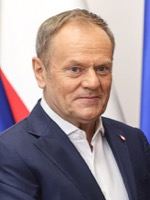 Donald TuskGovernmentPrime minister since December 2023; leads the pro-EU Civic Coalition. Former president of the European Council.
There is no other way.
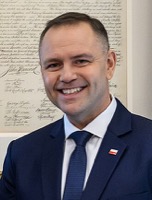 Karol NawrockiPresidentHead of state since August 2025, backed by PiS. Has refused to swear in five judges this parliament elected; picks the Tribunal’s president.
At a moment like this, the President must be in Poland.
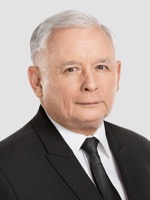 Jarosław KaczyńskiOpposition (PiS)Leader of Law and Justice (PiS), which governed 2015–2023 and remade the courts. Has floated EU exit talks as a fallback.
A police state.
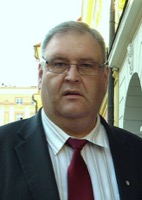 Bogdan ŚwięczkowskiTribunal (suspended)The Tribunal’s president since December 2024, a former national prosecutor under PiS. Rejects his suspension; prosecutors want his immunity lifted.
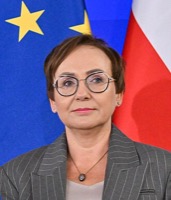 Anna Korwin-PiotrowskaTribunalElected to the Tribunal by the current parliament; Święczkowski has kept her and three others off the bench since April. The president never accepted her oath. Signed the suspension order.
Solutions by force are a catastrophe.
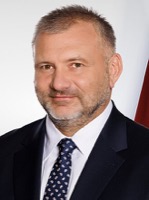 Waldemar ŻurekGovernmentJustice minister and, under Polish law, also prosecutor general. A judge disciplined under PiS. Asked police to secure the Tribunal.
Undoubtedly a coup d’état.
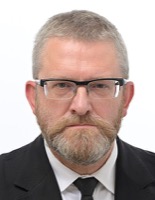 Grzegorz BraunFar rightMember of the European Parliament; leads the anti-Ukraine Confederation of the Polish Crown.
The only way out [is leaving the EU].
The institutions, with rough US comparisons
Photos: Wikimedia Commons — Tusk (Gov.pl, CC BY 3.0 PL), Nawrocki (The White House, public domain), Kaczyński (Chancellery of the Prime Minister, CC BY 3.0 PL), Święczkowski (Flickr, CC BY-SA 2.0), Korwin-Piotrowska (Sejm RP, CC BY 4.0), Żurek (Chancellery of the Prime Minister, CC BY 3.0 PL), Braun (© European Union 2024, EP).
Is it a coup? What would change our rating
A coup means seizing state power outside the constitution. A fight over one court, waged with orders, prosecutors and police at the gate, is not one, though it is escalating. We apply the same tests to both sides. The rating rises if we see:
- not seenForce inside the Tribunal: police or other services entering the building against the will of sitting judges, or seizing records.
- not seenDetentions of officials: judges, the Tribunal’s leadership, the president or opposition lawmakers detained, beyond the immunity process prosecutors have already started.
- not seenMilitary or emergency powers: the army or military police involved, or a state of emergency declared, by either side.
- not seenDefying the courts: the government or the president openly refusing to carry out a binding court ruling on the dispute.
- not seenMoves against the president’s office: any attempt to block, remove or bypass the president outside the constitution.
Signs of wider unrest
Online, the fight is being recast as “globalists” against “traditionalists,” with talk of civil war. That is a different risk from a coup, so we track it separately:
- seenViolence at the Tribunal: injuries, or weapons used by either side, beyond the thrown objects and four detentions on Oct. 30. On Oct. 31 police detained an armed, masked man who struck a protest organizer outside.
- watchingCalls to march or “resist” from figures who can move people: party leaders, a major broadcaster, church leaders.
- not seenSplits in the security services: police, army or the president’s protection service publicly taking sides or refusing orders.
- not seenOfficials threatening force: leaders on either side threatening or justifying force against citizens or the other camp.
- not seenRival crowds: supporters of both sides massing at the same place.
Who says what, and who spreads it
There are more than two sides. In Poland, two camps are fighting over a court. Both back Ukraine against Russia, but only one camp’s story is the one the Kremlin and Europe’s far right are now amplifying. Abroad, the story is retold as “globalists” against sovereign Christian nations, the frame Moscow promotes. We sort the people carrying it by who they are and what they add, not by any one post. The tag on each card says whether that side’s story matches Moscow’s. For background on the people, see Who’s who.
In Poland
-
The government and parliament’s judges
Prime Minister Donald Tusk; Justice Minister and Prosecutor General Waldemar Żurek; Judge Korwin-Piotrowska and the judges parliament elected
Restoring the rule of law to a court captured under PiS: “There is no other way.”
Pro-EU and pro-rule-of-law; the government Moscow’s voices are attackingMore
Their frameThey point to the European courts’ rulings. A day earlier Tusk had set the stakes as EU membership itself, after Kaczyński floated exit talks: “A hard fight. I don’t intend to lose it.”
What it leaves outThe president never accepted Korwin-Piotrowska’s oath (she took it in parliament with three others), so his camp does not recognise her as a judge at all. Kaczyński called exit talks a fallback if reforming the EU fails, and says he meant “thorough reform” (Konkret24). Some constitutional scholars say one judge has no legal power to suspend the court’s president, and police at a constitutional court hands opponents their picture.
Overreach in its defenseSmall accounts on the government’s side call the president “Putin’s man” or picture PiS leaders beside Dugin. We have seen no evidence tying either man to Moscow; what is on record is Moscow’s open support for their side (see Moscow, below). A left-wing post saying Democrats should copy Tusk in 2028 (7,900 likes) is now cited on the US right as proof of intent.
-
PiS, the president’s camp and their media
Jarosław Kaczyński; former president Andrzej Duda; former prime minister Beata Szydło; MEPs Arkadiusz Mularczyk and Dominik Tarczyński; Tribunal president Bogdan Święczkowski; Republika TV; wPolsce24; Ordo Iuris
A coup and a “police state”: the government seizing the last institution it does not control.
Backs Ukraine against Russia’s invasion, but its “coup” and “globalists” story is the one Moscow and Europe’s far right amplifyMore
Their frame“Usurpers” installed by force. Underneath it, in their telling, is a longer fight: legal elites never purged after communism, now shielded by Brussels, against a camp defending Polish sovereignty.
What they addThe word itself, and the pictures. Kaczyński called Poland “a police state.” Duda called the government “a gang of thugs” that “uses the baton.” Mularczyk wrote that “a coup d’état is underway.” Republika broadcast live under captions saying “Tusk’s armed services burst into” the Tribunal; Ordo Iuris issued English statements on a “forcible seizure.” A wPolsce24 commentator’s unsourced story that the government tried to stop the president’s plane landing is now repeated in English. Szydło has asked the European Parliament’s democracy committee for an emergency sitting (Interia).
What it leaves outPolice say they never entered the building; the EU’s top court has found the Tribunal is not independent; its leadership has kept parliament’s judges off cases.
The US bridgeMEP Dominik Tarczyński is PiS’s bridge to the US MAGA network. In 2018 he shared the Phyllis Schlafly Eagle Award in St. Louis with Petr Bystroň of Germany’s AfD (OKO.press), whom Munich prosecutors are investigating over alleged payments from the pro-Kremlin Voice of Europe network, which he denies (Euronews). In January 2024 he went on Jack Posobiec’s show on Real America’s Voice to say “Tusk is making Poland a puppet state,” during the fight over public media, the last time Tusk’s government moved on a PiS-held institution.
-
The anti-Ukraine far right
Grzegorz Braun’s Confederation of the Polish Crown, whose leader joined the crowd at the Tribunal with Janusz Korwin-Mikke, and media that back him
Tusk as a puppet of “globalists,” dragging Poland toward war with Russia; leaving the EU as “the only way out.”
Lines up with Moscow’s line on Ukraine and the EUMore
What they addThe street and the exit. Braun compared the night to the 1926 coup and called leaving the EU “the only way out.” A 2025 video of him burning an EU flag is being passed off as new (see claims).
What it leaves outThat both main camps in Warsaw back Ukraine against Russia, and that neither has proposed leaving the EU as an answer to this dispute.
How it traveled
- Inside Poland. PiS leaders said “coup” within minutes, and three parts of the same camp put it into English within 13 minutes, for foreign readers.
- Across Europe. Parties that oppose the EU fold Poland into a list of countries where, they say, Brussels overrides voters: Romania, Hungary, now Poland.
- The US and Moscow. US accounts add “America is next” and the November 3 midterms. Moscow’s officials and ideologues adopt the same “coup” word.
Minute by minute
At 16:49 UTC, minutes after the first reports of police at the court, PiS leader Jarosław Kaczyński’s official account posted that “Tusk’s services are forcing their way into the Tribunal,” called Poland “a police state,” and urged the protest to continue. It drew about 370,000 views. Party lawmakers then called supporters to the court. The English version followed:
- 17:10 UTC: an anchor at Republika TV, broadcasting live from the court, posted in English: “Donald Tusk’s coup d’etat.”
- 17:20 UTC: former prime minister Beata Szydło, now a PiS member of the European Parliament, wrote in English that police had “forced their way into” the Tribunal. About 226,000 views by evening.
- 17:23 UTC: a director at Ordo Iuris, a Catholic-conservative legal institute, wrote in English that police had “forcibly taken control of the empty” building.
All three made physical claims the police deny. A Polish account with about 13,000 followers posted Republika’s footage as police “storming” the building; it passed half a million views. US MAGA figures then reframed it for American audiences: Jack Posobiec wrote that “the globalists have launched a coup.” A Serbian podcaster’s version, which said the EU “has STILL NOT issued a statement,” drew about 300,000 views. A Spanish Vox MEP wrote that police had stormed the court for a “puppet government of Brussels,” and Viktor Orbán’s aide Balázs Orbán called it an attempted “judicial coup.” Russian state media came late, about three and a half hours in, and at first kept their distance: RIA Novosti called the seizure “allegedly” unlawful. By the next morning Medvedev was calling it “a constitutional coup.” Then the claim came home: PiS-aligned wPolityce ran a story headlined “US reaction to the coup” whose only American sources were the commentators Jack Posobiec and Joey Mannarino (wPolityce).
Abroad, the story becomes “globalists” against sovereign nations. “Globalist” has a long record of antisemitic use. Some smaller accounts in the same threads made that meaning explicit, and Posobiec framed the fight in racial terms.
Across Europe
-
Europe’s anti-EU right
Viktor Orbán’s camp in Hungary, including his aide Balázs Orbán; Slovenia’s former prime minister Janez Janša; France’s Marine Le Pen; Britain’s Nigel Farage and Liz Truss; France’s Florian Philippot; Germany’s AfD; Spain’s Vox and commentator Hermann Tertsch; the European Parliament group Patriots for Europe
What they addA list. Janša set “sending police to the Constitutional Court” beside Romania’s annulled election and cases in Hungary, Slovenia and Spain as signs of an EU that “must save itself from itself.” Patriots for Europe, the European Parliament group that includes Orbán’s and Le Pen’s parties, said the government was trying to seize the Tribunal “through police intervention” and condemned a “power grab.” Le Pen, whose party sits in that group, said the events “seem to amount to a forced takeover of a constitutional institution” and faulted the EU’s “indifference” (Nov. 1). The European Conservatives and Reformers group, which includes PiS, condemned the government and sided with Nawrocki (Euronews).
Lines up with Moscow’s “globalists versus sovereign nations” storyMore
Their frameFarage cast it as “a raid on the constitutional court” carried out “to defend the undemocratic EU.” Philippot, who campaigns for France to leave the EU, called it Tusk’s “Europeanist coup.” Tertsch’s post drew about 23,000 likes, the most of any non-English post we found.
What it leaves outIt turns a fight between two Polish camps into a fight between Poland and outsiders.
-
“Breaking news” aggregators
English-language accounts with 100,000 to 400,000 followers and European-sounding names; Spanish- and Portuguese-language relays
What they addVolume and recycled media. They pass off old videos as new (a 2025 flag burning, a past Independence Day march), overstate (a stadium chant becomes “the full backing of Poland”; Le Pen’s complaint about “strong-arm moves” (coups de force) and EU “indifference” becomes a warning “there is a COUP in Poland” that “suggests the European Union is INVOLVED”), and frame Wikipedia merging a duplicate page as censorship.
Spreads Moscow-friendly frames without adding its own
The United States
-
US MAGA and the midterm bridge
Jack Posobiec; Joey Mannarino; Mario Nawfal; Fox News host Laura Ingraham; Mike Benz; the group Take America Back; Tarczyński on Fox News
What they add“America is next.” A “globalist coup” against “the last Christian nation left in Europe,” in Mannarino’s words, presented as a preview of what is coming to the United States, timed to the November 3 midterms.
Lines up with Moscow’s “globalists” storyThe record
- Fox News host Laura Ingraham wrote that “America should watch what the globalists are trying to pull in Poland. Another warning to us.”
- Jack Posobiec, whose framing tracks Dugin’s “globalists” line, went further on Oct. 31: “The globalists hate Poland because it is a White country that loves Christ” (about 18,000 likes). It is a sample of how this faction frames the fight.
- Polish MEP Dominik Tarczyński, a member of PiS, told Fox News’s “Saturday in America” on Oct. 31 that “globalists attempted a coup” on the Tribunal, compared it to “what they tried to do with the Supreme Court in America,” and said the midterms “are so important not only for America but also for Poland.”
- Take America Back, a group whose posts we track on our color-revolution tracker, called Poland the fifth country “the globalists practiced on” and said “America is next” (6,500 likes). Its video ties Poland to the US “color revolution” claim and wrongly says Poland’s “Supreme Court fell.”
- Mike Benz, a former Trump-era State Department appointee, called it a “Donald Tusk led coup d’etat” by a faction tied to “the Democrat Party in the U.S.,” whose “mega donors effectively are puppeteering Donald Tusk.” He says US democracy programs demanded arrests to “stamp out populism” but shows no document.
- The account behind the US “color revolution” claim called it “the standard Color Revolution/Regime Change Operation”; his followers tied it to the midterms.
- The Harvard law professor Adrian Vermeule, a leading post-liberal theorist, called Tusk’s “There is no other way” “a pristine example of Schmitt’s ‘commissarial dictatorship’”: a suspension of normal law in the name of restoring it, the same idea Korwin-Piotrowska invoked as a “state of higher constitutional necessity.”
- A French tech entrepreneur’s post calling it “the trailer for what’s coming to the rest of us” drew about 12,000 likes; it repeats the false claim that riot police entered the building.
- A month-old account impersonating Eric Trump (814 followers) drew 2,800 likes praising the president’s entry as “strong leadership,” then posted “Pray For Poland.”
-
Conspiracy movements
A QAnon-linked figure; the LaRouche movement; “New World Order” accounts
What they addA bigger plot. Poland becomes a step in a plan by “globalists” or the “New World Order,” or, in the LaRouche telling, a plan “to carve up Russia.” The QAnon-linked post recycled Poland’s April 2026 order sending troops to its German and Lithuanian borders as breaking news (about 13,000 likes).
Lines up with Moscow’s story
Moscow
-
Russian officials and state media
Security Council deputy Dmitry Medvedev; Foreign Ministry spokeswoman Maria Zakharova; the ideologue Alexander Dugin; RIA Novosti, TASS and RT
What they addAn official endorsement. Former president Medvedev called it “a constitutional coup” by “Brussels’ foster-child Tusk” against PiS, and likened it to Ukraine, which Moscow calls “neo-Nazi” (Telegram, Oct. 31). He is the first Russian official we have found using the coup framing. On Nov. 1 he went further in English, mocking the idea of Russian involvement while repeating the label: “Constitutional coup in Poland? Of course, it’s Russians!” He tied it to US elections and to migrants in Spain, and signed off: “we are coming!”
Moscow’s own lineMore
Dugin drew the line early: Tusk the “EU-globalist, left wing,” Nawrocki the “trumpist” and “Polish nationalist, hostile to Kiev.” After the president’s entry he went further, wishing “luck and success to Polish right”: “I know they hate us, but we don’t hate them at all… The globalists are the worst.” He also wrote: “We hadn’t plans to attack Poland at all. And still haven’t. Everything can be revised if Europe takes down the illegitimate liberal globalist elites.” Zakharova taunted Foreign Minister Sikorski on Telegram that Poland’s “awkward moment” had arrived, turning his own Atlanta remark about Lavrov against him. RIA Novosti wrote of a crowd trying to climb the fence into the building and of security forces pelted with objects; we have not seen either reported in Polish media (WP).
Why it mattersMoscow’s official voice is aiming at the government that leads Europe’s support for Ukraine. Warsaw has noticed: Jan Grabiec, head of the prime minister’s chancellery, wrote that “Russian chieftains Dugin and Medvedev have launched a campaign of support for PiS. Zero surprise.”
Wire services and most European outlets (AP, AFP, Le Monde, most German-language outlets) report a power struggle over a court and use “coup” only in quotes. Errors run both ways: one German tabloid said the crowd wanted to storm the court; a French paper wrongly said the government removed the court’s president.
Claims going around
The most-shared claims, and what public sources can confirm.
ConfirmedA judge suspended the Tribunal’s president, and both sides claim to lead the court.
On Oct. 30 Judge Anna Korwin-Piotrowska, elected by the current parliament, posted an order on the Tribunal’s website suspending its president, Bogdan Święczkowski, and his deputy (Prawo.pl). Święczkowski rejects the suspension and says he is still the court’s president; the president’s office still recognizes him (BBC).
Where it came from: The Tribunal’s website and X account; Polish outlets
ConfirmedThe president turned his plane around and returned to Warsaw.
President Nawrocki cut short a trip to Senegal and flew back to Warsaw on Oct. 30 (Wirtualna Polska).
Where it came from: Presidential office; flight trackers
DisputedVideo shows the president pushing his way in; no one was hurt.
A PiS member of the European Parliament posted “The president was attacked!” with video of the doorway (about 18,000 likes). The footage shows Nawrocki pushing between people at the Tribunal’s door. Each side accuses the other of assault; no injuries were reported.
Where it came from: A PiS member of the European Parliament on X
DisputedThe Tribunal’s own security staff were removed.
Warsaw police said they took no action against the court’s own guards and that officers were not inside the building (Warsaw police). On Oct. 31 Korwin-Piotrowska sent most Tribunal staff home on full pay, and on Nov. 1 she set rules for who may enter the building (BBC). Those are court orders, not a police removal.
Where it came from: Former PM Beata Szydło and an Ordo Iuris lawyer, in English
DisputedPolice took over an “empty” building at night.
Police say they secured the grounds and never entered the building (Warsaw police). The fight is over who runs the court, not over control of an empty building.
Where it came from: An Ordo Iuris lawyer on X
UnconfirmedOfficers hid their badge numbers.
The claim rests on a single post. No outlet or police statement we have seen reports it.
Where it came from: An Ordo Iuris lawyer on X
UnconfirmedTusk personally ordered the police in.
Warsaw police say they came at the written request of Prosecutor General Waldemar Żurek, who is also justice minister in Tusk’s government, and of Judge Korwin-Piotrowska, citing risks to life and health (Warsaw police). No order from Tusk himself is on record. A government source told Interia the plan was prepared for weeks by Maciej Berek, a long-time Tusk aide whom this parliament elected to the Tribunal (Interia).
Where it came from: Opposition and US accounts
No evidenceThe government waited until the president had left the country.
A government source told Interia the weekend timing was “not accidental,” and Interia had described the plan to remove Święczkowski on Oct. 19 (Interia). Nothing on record ties the timing to the president’s trip to Senegal.
Where it came from: Opposition and US accounts
No evidenceViral video of a huge flag march is an old clip, not this week’s protests.
A US-branded aggregator account posted a TikTok clip as “300,000 polish patriots on the streets” declaring Poland a Christian country (about 13,000 likes). The account first posted it before the Oct. 30 standoff began, and it matches footage of Warsaw’s annual November 11 Independence March.
Where it came from: A US-branded aggregator account on X
No evidenceThe viral anthem video is old concert footage, not a crowd that “stopped the coup.”
A Portuguese right-leaning account’s post (about 50,000 likes), copied in at least eight languages, says the clip shows Poles who took to the streets and stopped a coup “without vandalism.” The same footage, filmed from the same spot, was posted to YouTube on Sept. 11, seven weeks before the standoff began (YouTube); it shows a stage concert, not the Tribunal. Polish radio journalist Paweł Żuchowski flagged it as being copied across US accounts with differing captions (X). There was no coup to stop, and the Oct. 30 protest saw objects thrown and four detentions.
Where it came from: Accounts on X in several languages
No evidenceViral video of a Polish politician burning an EU flag is from May 2025, not this week.
An English-language account on X posted it on Oct. 30 as a new act of defiance (about 12,000 likes). The far-right MEP Grzegorz Braun posted the clip himself on May 6, 2025, the day the European Parliament lifted his immunity. It has nothing to do with this week’s court fight.
Where it came from: An English-language account on X
No evidenceNothing on record shows a move to remove the president.
A widely shared English-language explainer for foreigners (about 25,000 likes) says Tusk is seizing the courts in order to “remove a president beloved by the Polish people.” No step to remove Nawrocki has been announced, and removing a president requires a two-thirds vote of both houses of parliament sitting together, which the governing coalition does not have.
Where it came from: An English-language explainer account on X
No evidenceNo plan to adopt the Euro or move Poland’s gold is on record.
PiS MEP Dominik Tarczyński says in a video, shared by a US account to about 80,000 likes and 1.7 million views, that the government wants the Tribunal so it can take Poland into the Euro “and then take our gold, the biggest reserve in European Union, to Frankfurt.” A graphic shared by Fox News host Laura Ingraham turns it into a five-step “plan” to oust the president, take over the central bank, adopt the Euro and send Poland’s gold to Frankfurt. Adopting the Euro would require amending Poland’s constitution, which the coalition lacks the votes to do; the government has started no such process, and its finance minister says it is not planning to adopt the Euro (BBC, Money.pl). Joining the Euro would not hand Poland’s gold to Frankfurt either: when the Euro launched, national central banks transferred about €40 billion in reserves to the ECB in total, 15% of it in gold, and kept the rest (Demagog). Poland’s roughly 670 tonnes, built up as the world’s biggest gold buyer this year (World Gold Council via Kitco), are not the EU’s largest reserve: Germany holds about five times as much. Fact-checkers have debunked versions of this claim since at least 2022, including a fabricated Tusk quote (Demagog, CEDMO). The real fight underneath is over the central bank itself: parliament plans a November vote on sending its governor, Adam Glapiński, to the State Tribunal, a dispute that runs through the same court (RMF24).
Where it came from: PiS MEP Dominik Tarczyński, in a video; a graphic shared by Fox News host Laura Ingraham
No evidencePolice stormed or raided the Tribunal building.
Police say they never entered the building and used no batons or pepper spray; they detained four people outside (Warsaw police, OKO.press). The only forced entry on record came from the other side: shortly before 1 a.m. on Oct. 31 the president, his security detail and the head of the Supreme Court got past the police line and pushed past judges at the door.
Where it came from: PiS leaders, PiS-aligned TV, US and Balkan accounts
MisleadingA viral nine-point “coup timeline” gets the basic facts wrong.
The list says Tusk appointed eight judges when he could appoint three, swore five in himself, ordered police in, and that the president “removed the five judges” once inside. Parliament, not the prime minister, elects the Tribunal’s judges, and the European Commission says appointing all eight is within its powers (Euronews). The four the president refused to swear in took their oath in parliament (Notes from Poland). Police say they came at the request of the prosecutor general and the judge (Warsaw police). No judge has been removed: on Nov. 1 Korwin-Piotrowska was still setting the rules for entering the building (BBC).
Where it came from: A numbered list copied across X in English and Spanish, and a column in American Greatness
Why we rated them this way
Stormed the building: police say they were on the grounds and the street only; the most-shared clip, from the PiS-aligned channel Republika TV, shows riot police outside, by the fence. Empty building: Korwin-Piotrowska said seven judges were inside that evening. Tusk ordered it: police cite letters from the prosecutor general, who is also justice minister, and from a judge; we have found no order from Tusk. Guards removed: police say they took no action against the court’s guards.
What to watch next
- Whether the president and the government agree to talks on resetting the Tribunal. Nawrocki held consultations on Oct. 31; Polska 2050’s Szymon Hołownia said he saw “will on the president’s side” to talk, while KO and the Left stayed away (RMF24, Puls Biznesu). Adrian Zandberg of Razem, a left party outside the government, also called for a “constitutional reset”: ending all the judges’ terms and electing a new Tribunal by a constitutional majority (X, Oct. 31).
- Nov. 3: the president’s National Security Council meets in closed session on a permanent US base in Poland (prezydent.pl), the same day as the US midterms. The government objects to inviting Grzegorz Braun’s party, whose members the interior minister calls “agents of influence” for the East (Defence24). Watch whether the Tribunal fight spills into the meeting, and how US accounts link the two.
- A no-confidence vote. Former prime minister Mateusz Morawiecki’s Rozwój Plus says it will file a constructive no-confidence motion naming former Sejm speaker Marek Jurek as caretaker prime minister (TVP Info, Rzeczpospolita).
Why
It needs 231 of 460 votes. The right-wing opposition holds about 207 seats (Sejm club data), so it would need defections from Tusk’s coalition partners PSL or Polska 2050, which both pressed the president on Oct. 31 to recognize the judges the Sejm elected this year (Puls Biznesu). It is a lawful parliamentary route. The vote can come no sooner than a week after the motion is filed.
- What Nawrocki and Święczkowski do next, now that the president has been inside the building.
- November 3, the judges’ general assembly Korwin-Piotrowska has called.
- Saturday, when Święczkowski says the judges he recognizes will return to demand entry.
- Whether either side asks a court to rule on Korwin-Piotrowska’s order, and whether that ruling is obeyed.
- The immunity requests against Święczkowski and other judges.
- Street protests at the Tribunal, and how police handle them.
- Statements from the European Commission, the Council of Europe and the US State Department.
- Whether calls to leave the EU spread beyond the fringe.
Why
Braun calls exit “the only way out” and Kaczyński has floated exit talks as a fallback, while abroad, high-reach accounts now cast the dispute as the EU staging coups against member states. The pattern suggests the framing is meant to seed a Polish exit movement that could spread to other members. Signs it is spreading: PiS leaders endorsing exit, movement in polling on membership, and the same template turning up in other EU countries.
- A late-November vote that could suspend the central bank’s chief, which may turn on who controls the Tribunal.
Why
The Sejm plans to vote in the second half of November on sending National Bank of Poland president Adam Glapiński, a PiS appointee, to the State Tribunal, a step that by law suspends him. The Constitutional Tribunal struck down that suspension rule in 2024, so control of the Tribunal may decide whether he stays, and EU law’s protections for central bankers could draw in the European Central Bank (RMF24).
- Whether US accounts apply the Poland “coup” story to the November 3 midterms or their aftermath, and whether any official Trump-family or administration account takes it up.
- Whether Russian and Belarusian state media take up the coup line, as Belarusian outlets did against Tusk in 2025 and early 2026.
Timeline
- Mar–Apr 2026Parliament elects six judges; Nawrocki swears in two; four take their oath in parliament (Notes from Poland).
- Apr 2026The Tribunal refuses to admit the four judges sworn in by parliament (Notes from Poland).
- May 6, 2026European Court of Human Rights orders Poland to stop blocking the four judges (Notes from Poland).
- Jul 14, 2026Police, with a prosecutor, enter the Tribunal during a judges’ meeting over admitting parliament’s new judges (Polsat News).
- Jul 2026Nawrocki swears in a third parliament-elected judge, Sławomir Patyra.
- Sep 2026Tusk aide Maciej Berek elected to the Tribunal (Notes from Poland).
- Sep 11, 2026Posts claim police are massing to seize the Tribunal; officers guard its 40th-anniversary conference (Interia).
- Oct 13, 2026Venice Commission says Tribunal judges can take their oath without the president if he refuses (OKO.press).
- Oct 14, 2026Berek, refused by Nawrocki, becomes the fifth judge sworn in by parliament (Notes from Poland); protesters try to block judges at the Tribunal gate; police clear it and detain three (TVP Info).
- Oct 28–29, 2026Kaczyński floats EU exit talks as a fallback; Tusk calls EU membership the stake (Konkret24).
- Oct 30, 2026Korwin-Piotrowska suspends Święczkowski; police secure the grounds; four detained; Nawrocki flies home; the Supreme Court’s head calls the police action a coup (Wirtualna Polska).
- Oct 30, 2026Poland’s ambassador to China, Jakub Kumoch, a former foreign-policy adviser to President Duda, resigns, saying he cannot continue in the post given events at home; Foreign Minister Sikorski hits back (TVN24). After midnight the ambassador to Romania, Paweł Soloch, also resigns, citing an “unlawful attempt to take over” the Tribunal (WP).
- Oct 31, 2026Shortly before 1 a.m., Nawrocki and the Supreme Court’s head enter the Tribunal building, pushing past judges at the door; each side accuses the other of assault (PAP).
Earlier history, 2015–2025
- Oct 2015Outgoing Civic Platform–led parliament elects five Tribunal judges, two for seats that open only after its term ends (Notes from Poland).
- Dec 2015New PiS majority voids all five and elects its own; President Andrzej Duda swears them in; the Tribunal rules three of the October picks were valid (Notes from Poland).
- May 2021European Court of Human Rights rules a Tribunal panel including a PiS-era pick was not a lawful court (Notes from Poland).
- Mar 2024Tusk-era parliament declares the Tribunal’s makeup unlawful; the government stops publishing its rulings (OKO.press).
- Dec 2024Duda names Bogdan Święczkowski Tribunal president (Notes from Poland).
- Feb 2025Tribunal president Święczkowski accuses Tusk’s government of a coup (Notes from Poland).
- Sep 2025Justice minister seeks criminal charges against Święczkowski (Notes from Poland).
- Dec 2025EU Court of Justice finds the Tribunal is not an independent court (CJEU).
For researchers and reporters
What independent experts say
Polish constitutional lawyers disagree, but not along party lines. Some who blame PiS for wrecking the Tribunal still doubt the legal basis for this week’s suspension or criticize the use of police. Only some call it a coup, and those who do mean the criminal-law offense, not a seizure of the state.
Doubt the legal basis without calling it a coup
- The Helsinki Foundation for Human Rights, one of Poland’s leading rights groups, said the legal basis for suspending the Tribunal’s president and vice-president is “doubtful.” The law cited lets only the justice minister or a court president remove a judge, for at most 30 days, and the longest-serving judge stands in only if the post is vacant or the president cannot name a deputy. Neither applies here. Relying on a “state of higher constitutional necessity,” it said, is “in practice equivalent to admitting” there is no undisputed legal basis, and sets “a dangerous precedent.” It also says the Tribunal has been in “deep institutional crisis” since late 2015 and cannot work independently (HFHR, Oct. 31).
- Four former presidents of the Tribunal, Marek Safjan, Jerzy Stępień, Bohdan Zdziennicki and Andrzej Zoll, backed the steps taken by the judges the current Sejm elected. They called the president’s night-time visit to the court “a direct attempt to violate the autonomy of the constitutional court.” They said the Tribunal has been in deep crisis for more than a decade, with improperly appointed people sitting on its panels, and that convening the full court is the only way out: “There is no other way” (Euronews).
- Javier Cremades, a Spanish lawyer who heads the World Jurist Association, wrote that he understands the government’s arguments but that “police forces should have no place in a constitutional court” and that the dispute “should be resolved through other means” (Financial Times).
- Marcin Matczak, University of Warsaw, a longtime critic of PiS’s handling of the court, called the legal basis “nonexistent” and what happened “completely unnecessary”: “You cannot restore the rule of law by force.” He declined to call it a coup, describing “a fight over a state institution” that PiS destroyed, and warned of “dual power” as rival orders pile up (RMF24, Polsat News). Two weeks earlier he had said it was the president who was “carrying out a coup” (Polsat News, Oct. 14).
- Maciej Gutowski, Adam Mickiewicz University, told PAP that “neither side is fully right”: PiS bears most of the blame for the crisis, but the governing coalition has failed to resolve it, and only a compromise can (WP).
Unsure
- Ewa Łętowska, a retired Tribunal judge and Poland’s first ombudsman, said the law never foresaw this situation, that whether one judge could suspend the president is open to different readings, and that only the Tribunal’s full assembly can settle it. She fears the court “will probably not regain its authority” (WP).
Call it a coup in the legal sense
- Ryszard Piotrowski, University of Warsaw, called it “an obvious attack on a constitutional organ of the state, not by armed forces but by police subordinate to the government.” He says Judge Korwin-Piotrowska, sworn in before parliament rather than the president, “did not take the oath and is not a judge. This is usurpation” (WP).
- Jacek Zaleśny, constitutional scholar, called it “a question of a coup d’état.” In his view only the Tribunal’s president can authorize police action in its building or remove its leadership, and police crossing the gate to install someone against the president’s will fits Article 128 of the criminal code, which punishes attempts to remove a constitutional body by force (Zero.pl). Police say they stayed outside the building and acted at the request of the prosecutor general and a judge.
The European courts
- The European Court of Human Rights ordered Poland in May to stop blocking four of the judges parliament elected (Notes from Poland), and the EU’s Court of Justice found in December 2025 that the Tribunal does not meet the standard of an independent court (CJEU). In October the Venice Commission, the Council of Europe’s panel of constitutional experts, said oaths taken without the president are valid (OKO.press). PiS and the Tribunal reject both courts’ authority here; the Tribunal ruled in November 2021 that the Strasbourg ruling was not binding (Notes from Poland).
- Alberto Alemanno, an EU-law professor at HEC Paris, says the EU treaties oblige Poland to restore an independent Tribunal, but “restoring the rule of law must itself be done lawfully.” He says Friday’s suspension, accompanied by police outside the building, “is not in itself a ‘coup,’” faults the appointment of Tusk aide Maciej Berek as contradicting the pledge to depoliticize the court, and rejects treating the two sides as symmetrical (X thread).
This page’s rating asks a narrower question than the lawyers do: whether anyone has seized state power outside the constitution.
Key sources
- Wirtualna Polska live coverage, Oct. 30 (includes the Warsaw police statement)
- Polsat News: the notice on the Tribunal’s website
- Notes from Poland: European court orders the Tribunal to accept the judges
- Court of Justice of the EU, December 2025 press release
Living this in Poland? Tell us
We want this page grounded in the experience of people who know Polish politics first-hand: scholars, lawyers, journalists, and anyone at the Tribunal or following events from inside Poland. If we have something wrong, are missing something, or describe it in a way that doesn’t match what you are seeing, email editor@america2.news with the subject “Poland Tribunal,” and include links or photos where you can. We read every message, check what we receive against credible sources, and won’t name you without your permission.
Piszemy z zewnątrz i chcemy oprzeć tę stronę na doświadczeniu ludzi, którzy przeżywają to na miejscu. Jeśli coś pominęliśmy lub źle opisaliśmy, napisz do nas po polsku lub po angielsku na editor@america2.news, w temacie „Trybunał”. Nie podamy Twojego nazwiska bez Twojej zgody.