Poland Tribunal
Is a coup underway in Poland?
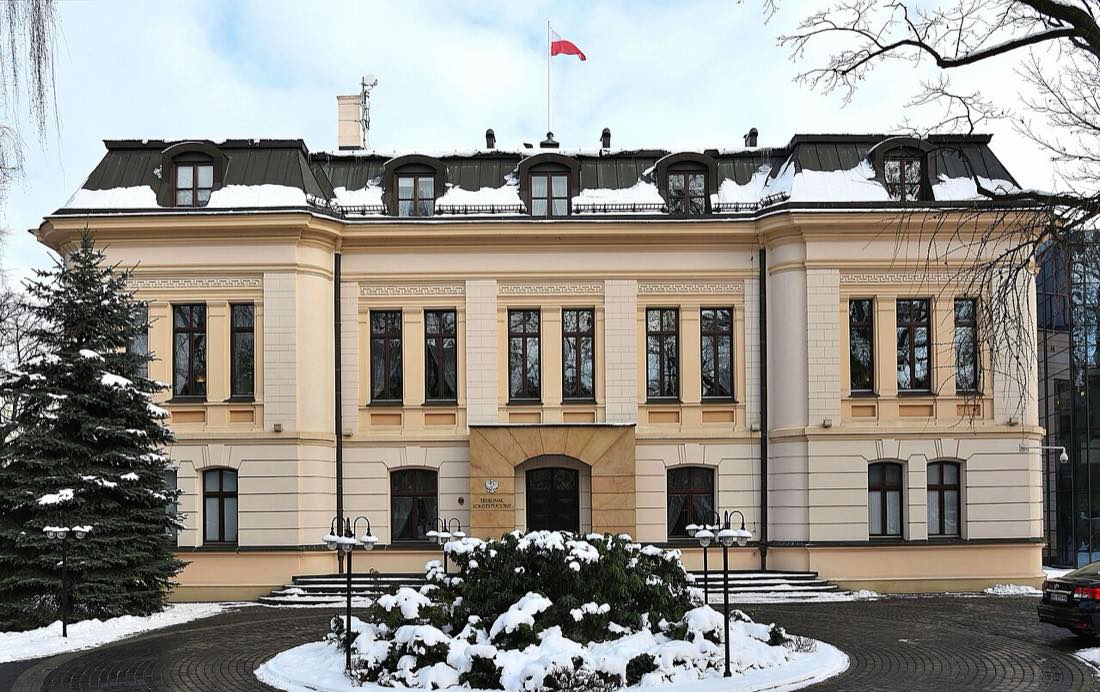

On October 30, a judge on Poland’s Constitutional Tribunal suspended the court’s president, and police secured the court’s grounds. Whether one judge had the power to do that is fiercely disputed; the head of Poland’s Supreme Court called it a coup. Within minutes, leaders of the opposition Law and Justice party (PiS) and the TV channel aligned with it were telling foreign audiences, in English, that police had stormed the building in a “coup.” Police say they never went inside. This page tracks what is confirmed, who is pushing the coup claim, and what would show an actual seizure of power.
A judge elected by the current parliament, whose oath the president never accepted, suspended the Constitutional Tribunal’s president on Oct. 30. Police, called in by the prosecutor general and that judge, are keeping the suspended leadership out of the building but have not gone inside. Each side calls the other’s moves illegal: the head of the Supreme Court, a Nawrocki appointee, called the police action a coup, while the government says it is restoring a court captured under PiS. Abroad, PiS figures pushed the coup claim in English, and US MAGA accounts and Nigel Farage recast it as a fight over “globalists” and the EU. Nothing so far shows a seizure of state power: the fight is being waged through orders, prosecutors and police at the gate, and next at the judges’ Nov. 3 assembly.
What would change this rating ↓
polandtribunal.america2.newsGet America 2.0 in your inbox
Analysis of Russian influence, information warfare and the networks behind them. Free; unsubscribe anytime.
Key players and institutions
Who is who, for readers new to Polish politics. Quotes are each person’s own words; the labels show where they stand in this dispute, not a verdict on them.
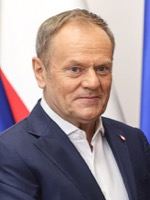 Donald TuskGovernmentPrime minister since December 2023; leads the pro-EU Civic Coalition. Former president of the European Council.
There is no other way.
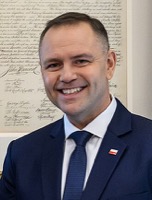 Karol NawrockiPresidentHead of state since August 2025, backed by PiS. Has refused to swear in four judges this parliament elected; picks the Tribunal’s president.
At a moment like this, the President must be in Poland.
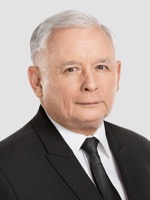 Jarosław KaczyńskiOpposition (PiS)Leader of Law and Justice (PiS), which governed 2015–2023 and remade the courts. Has floated EU exit talks as a fallback.
A police state.
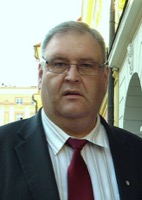 Bogdan ŚwięczkowskiTribunal (suspended)The Tribunal’s president since December 2024, a former national prosecutor under PiS. Rejects his suspension; prosecutors want his immunity lifted.
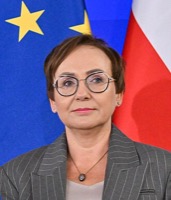 Anna Korwin-PiotrowskaTribunalElected to the Tribunal by the current parliament; Święczkowski has kept her and three others off the bench since April. The president never accepted her oath. Signed the suspension order.
Solutions by force are a catastrophe.
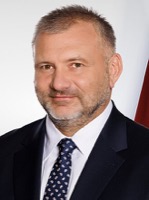 Waldemar ŻurekGovernmentJustice minister and, under Polish law, also prosecutor general. A judge disciplined under PiS. Asked police to secure the Tribunal.
Undoubtedly a coup d’état.
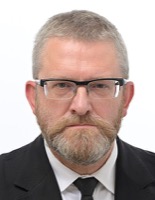 Grzegorz BraunFar rightMember of the European Parliament; leads the anti-Ukraine Confederation of the Polish Crown.
The only way out [is leaving the EU].
The institutions
Photos: Wikimedia Commons — Tusk (Gov.pl, CC BY 3.0 PL), Nawrocki (The White House, public domain), Kaczyński (Chancellery of the Prime Minister, CC BY 3.0 PL), Święczkowski (Flickr, CC BY-SA 2.0), Korwin-Piotrowska (Sejm RP, CC BY 4.0), Żurek (Chancellery of the Prime Minister, CC BY 3.0 PL), Braun (© European Union 2024, EP).
How each side frames it
There are more than two sides. Inside Poland, the government and the Law and Justice opposition are fighting over who controls a court, and both camps take a hard line on Russia, so the fight does not line up with the Russia–West divide. Abroad, the coup claim changes shape: it is retold as a battle between “globalists” and sovereign Christian nations, the worldview conflict that runs through the information war between Russia and the West. The tag on each card says whether that side’s story lines up with Moscow’s.
-
The government and parliament’s judges
Prime Minister Donald Tusk; Justice Minister and Prosecutor General Waldemar Żurek; Judge Korwin-Piotrowska and the judges parliament elected
Their frameRestoring the rule of law to a court captured under PiS: “There is no other way.” They point to the European courts’ rulings. A day earlier Tusk had set the stakes as EU membership itself, after Kaczyński floated exit talks: “A hard fight. I don’t intend to lose it.”
What it leaves outThe president never accepted Korwin-Piotrowska’s oath (she took it in parliament with three others), so his camp does not recognise her as a judge at all. Kaczyński called exit talks a fallback if reforming the EU fails, and says he meant “thorough reform” (Konkret24). Some constitutional scholars say one judge has no legal power to suspend the court’s president, and police at a constitutional court hands opponents their picture.
Pro-EU; as hard on Russia as its rivals. No overlap with Moscow’s story -
PiS, the president’s camp and the court’s leadership
Jarosław Kaczyński; former president Andrzej Duda; Tribunal president Bogdan Święczkowski; President Karol Nawrocki’s allies; Republika TV; Ordo Iuris
Their frameA coup and a “police state”: the government seizing the last institution it does not control, with “usurpers” installed by force. Underneath it, in their telling, is a longer fight: legal elites never purged after communism, now shielded by Brussels, against a camp defending Polish sovereignty.
What it leaves outPolice say they never entered the building; the EU’s top court has found the Tribunal is not independent; its leadership has kept parliament’s judges off cases.
At odds with Brussels, but among Europe’s hardest-line parties on Russia. No overlap with Moscow’s story -
The US and European national-conservative right
US MAGA figures Jack Posobiec, Joey Mannarino and Mario Nawfal; Britain’s Nigel Farage and Liz Truss; Hungary’s government; Spain’s Vox
Their frameA “globalist coup” against “the last Christian nation left in Europe,” in Mannarino’s words, with the physical claims repeated: stormed, raided, timed for the president’s absence. Farage cast it as “a raid on the constitutional court” carried out “to defend the undemocratic EU.” From Moscow, the ideologue Alexander Dugin drew the same line: Tusk the “EU-globalist, left wing,” Nawrocki the “trumpist” and “Polish nationalist, hostile to Kiev.” In the US, the account behind the “color revolution” claim about American elections called it “the standard Color Revolution/Regime Change Operation,” and his followers tied it to the US midterms. The Harvard law professor Adrian Vermeule, a leading post-liberal theorist, called Tusk’s “There is no other way” “a pristine example of Schmitt’s ‘commissarial dictatorship’”: a suspension of normal law in the name of restoring it, the same idea Korwin-Piotrowska invoked as a “state of higher constitutional necessity.”
What it leaves outMost of the record above. It turns a fight between two Polish camps into a fight between Poland and outsiders.
Lines up with Moscow’s “globalists versus sovereign nations” story“Globalist” has a long record of antisemitic use. In some smaller accounts in the same threads, that meaning was explicit.
-
Poland’s anti-Ukraine far right
Grzegorz Braun’s Confederation of the Polish Crown, whose leader joined the crowd at the Tribunal with Janusz Korwin-Mikke; smaller accounts that oppose support for Ukraine
Their frameTusk as a puppet of “globalists” and foreign capitals, dragging Poland toward war with Russia. Braun compared the night to the 1926 coup and called leaving the EU “the only way out.”
What it leaves outThat both main camps in Warsaw back Ukraine against Russia, and that neither has proposed leaving the EU as an answer to this dispute.
Lines up with Moscow’s line on Ukraine and with the “globalists” story -
Russian state media
RIA Novosti, TASS, RT and the Foreign Ministry
Their frameSo far, distance. RIA Novosti called the takeover only “allegedly” unlawful, hours late; most outlets were quiet on the first evening.
Why it mattersNeither Polish camp is a friend of Moscow. Whether Russian outlets later take up the coup line is on our watch list.
Holding back, for now -
Wire services and most European outlets
AP, AFP, Le Monde and most German-language outlets
Their frameA power struggle over a court: a suspension, police deployed, the president flying home. No “coup” in their own headlines; where it appears, it is attributed.
Errors both waysOne German tabloid said the crowd wanted to storm the court; a French paper wrongly said the government removed the court’s president.
Reporting, not a side
Living this in Poland? Tell us
We want this page grounded in the experience of people who know Polish politics first-hand: scholars, lawyers, journalists, and anyone at the Tribunal or following events from inside Poland. If we have something wrong, are missing something, or describe it in a way that doesn’t match what you are seeing, email editor@america2.news with the subject “Poland Tribunal,” and include links or photos where you can. We read every message, check what we receive against credible sources, and won’t name you without your permission.
Piszemy z zewnątrz i chcemy oprzeć tę stronę na doświadczeniu ludzi, którzy przeżywają to na miejscu. Jeśli coś pominęliśmy lub źle opisaliśmy, napisz do nas po polsku lub po angielsku na editor@america2.news, w temacie „Trybunał”. Nie podamy Twojego nazwiska bez Twojej zgody.
Latest reports
New reporting from major outlets and official sources, listed as it appears. Our monitoring adds headlines from major outlets automatically. "Checked" means our software fetched the full report and confirmed it supports its headline. "Reviewed" means an editor checked it against its source. "Auto" items have not been checked yet. Tap a label for our note. None of this is an endorsement. Our assessment is the rating above.
- Poland suspends top judges as battle over rule of law escalates (Financial Times)
reviewed ⚠ ▾
Caution: One judge, not the state, issued the suspension order, and police say they secured the grounds but did not enter the building.An editor checked this report against its source. (2026-10-30) - W Pałacu Prezydenckim odbędzie się spotkanie Prezydenta RP Karola Nawrockiego z Prezesem Trybunału Konstytucyjnego Bogdanem Święczkowskim oraz Pierwszym Prezesem Sądu Najwyższego Zbigniewem Kapińskim (President's office (X))
reviewed ▾
An editor checked this report against its source. (2026-10-30) - Korwin-Piotrowska gotowa spotkać się z Nawrockim w Pałacu Prezydenckim (PAP)
reviewed ▾
An editor checked this report against its source. (2026-10-30) - Awantura o Trybunał. Wyjaśniamy, kim jest Anna Korwin-Piotrowska (Business Insider Polska)
reviewed ▾
Our note: Profile of the judge: a former court president who clashed with PiS’s justice ministry and now heads the Themis judges’ association.An editor checked this report against its source. (2026-10-30) - Chaos at Poland's constitutional court as government-backed judges seek to oust chief justice (Notes from Poland)
reviewed ▾
An editor checked this report against its source. (2026-10-30) - Police deployed during stand-off over control of Poland's top court (BBC)
reviewed ▾
An editor checked this report against its source. (2026-10-30) - Chaos w Trybunale. Policja przed budynkiem, Nawrocki zawraca samolot [relacja na żywo] (Wirtualna Polska)
reviewed ▾
Our note: Live coverage, including the full police statement and Święczkowski outside the gate.An editor checked this report against its source. (2026-10-30) - Polish president turns back from Senegal trip as top court chief suspended (Reuters)
reviewed ▾
An editor checked this report against its source. (2026-10-30) - Polish president turns back mid-flight amid court 'coup d'état' claims (Euronews.com)
reviewed ▾
An editor checked this report against its source. (2026-10-30) - Jakub Kumoch rezygnuje ze stanowiska ambasadora RP w Chinach (TVN24)
reviewed ▾
An editor checked this report against its source. (2026-10-30)
Claims in circulation
The most-shared claims, and what public sources can confirm.
ConfirmedA judge suspended the Tribunal’s president, and both sides claim to lead the court.
The Tribunal’s website and X account; Polish outlets
ConfirmedThe president turned his plane around and returned to Warsaw.
Presidential office; flight trackers
DisputedThe Tribunal’s own security staff were removed.
Former PM Beata Szydło and an Ordo Iuris lawyer, in English
DisputedPolice took over an “empty” building at night.
An Ordo Iuris lawyer on X
UnconfirmedOfficers hid their badge numbers.
An Ordo Iuris lawyer on X
UnconfirmedTusk personally ordered the police in.
Opposition and US accounts
No evidenceThe government waited until the president had left the country.
Opposition and US accounts
No evidencePolice stormed or raided the Tribunal building.
PiS leaders, PiS-aligned TV, US and Balkan accounts
Notes. Stormed the building: police say they were on the grounds and the street only; the most-shared clip, from the PiS-aligned channel Republika TV, shows riot police outside, by the fence. Empty building: Korwin-Piotrowska said seven judges were inside that evening. Tusk ordered it: police cite letters from the prosecutor general, who is also justice minister, and from a judge; we have found no order from Tusk. Guards removed: police say they took no action against the court’s guards.
What would change this assessment
A coup means seizing state power outside the constitution. A bitter fight over who controls a court, fought with court orders, prosecutors and police at the gate, is not one. Police are now keeping the suspended president and his deputy out of the building, enforcing one side’s reading of a disputed order. That is a serious escalation, and it is why the force and courts tests below matter. The rating rises if we see:
- not seenForce inside the Tribunal: police or other services entering the building against the will of sitting judges, or seizing records.
- not seenDetentions of officials: judges, the Tribunal’s leadership, the president or opposition lawmakers detained, beyond the immunity process prosecutors have already started.
- not seenMilitary or emergency powers: the army or military police involved, or a state of emergency declared, by either side.
- not seenDefying the courts: the government or the president openly refusing to carry out a binding court ruling on the dispute.
- not seenMoves against the president’s office: any attempt to block, remove or bypass the president outside the constitution.
The rating would also move if the president or the opposition used force to retake the Tribunal. We apply the same tests to both sides.
Signs of wider unrest
Online, both camps are recasting the dispute as “globalists” against “traditionalists,” and some accounts now talk of civil war. That is a different risk from a coup, so we track it separately. These signs would raise concern about unrest even if no one seizes power.
- watchingViolence at the Tribunal: injuries, or weapons used by either side, beyond the thrown objects and three detentions so far.
- watchingCalls to march or “resist” from figures who can move people: party leaders, a major broadcaster, church leaders.
- not seenSplits in the security services: police, army or the president’s protection service publicly taking sides or refusing orders.
- not seenOfficials threatening force: leaders on either side threatening or justifying force against citizens or the other camp.
- not seenRival crowds: supporters of both sides massing at the same place.
What is actually known
- The order. Judge Anna Korwin-Piotrowska posted an order on the Tribunal’s website suspending its president, Bogdan Święczkowski, and his deputy, Bartłomiej Sochański, reportedly for one month. She claimed authority as the judge with the longest judicial career, though she joined the Tribunal only in April, and cited Article 130 of the law on the common courts (Prawo.pl). Her grounds: they blocked the meeting needed to adopt the court’s 2027 budget, assigned judges to cases “contrary to the law,” and kept judges elected by parliament from hearing cases (Polsat News, Prawo.pl). Korwin-Piotrowska told TVP Info the court faced “a state of higher constitutional necessity,” called its judges to a general assembly on November 3 to pass the budget, and urged politicians not to call people into the streets: “solutions by force are a catastrophe” (RMF24). The head of the Supreme Court, First President Zbigniew Kapiński, whom Nawrocki appointed in May, called the police action “undoubtedly a coup d’état” and said in a written statement that police “cannot be used as an instrument of pressure” on courts and tribunals (WP, Rzeczpospolita). On his return Nawrocki was to meet him and Święczkowski together at the presidential palace; the president’s office still calls Święczkowski the Tribunal’s president. Korwin-Piotrowska says she is ready to meet Nawrocki too. The US ambassador, Tom Rose, called it “an unprecedented confrontation over the government’s use of state power and the independence and authority of a constitutional institution,” said it was “not our place to judge or interfere,” and urged officials, police and demonstrators alike to avoid escalation. A member of the government told Interia the weekend timing was “not accidental” and that “perhaps four people knew the plan in detail”: it had been prepared for weeks by Maciej Berek, a long-time Tusk aide whom this parliament elected to the Tribunal and whose oath the president disputes. Interia had described the plan to remove Święczkowski on October 19.
- The other side. The Tribunal’s X account, still run by Święczkowski’s office, called the website takeover unlawful, said Korwin-Piotrowska is not a Tribunal judge, and accused those involved of a coup. Święczkowski called the new judges “usurpers.” Later that evening a protester cut the chains on the gate, on Święczkowski’s instruction by his own account, and he stepped onto the grounds before a police cordon stopped him. He said the judges he recognizes would return on Saturday to demand entry (wPolityce, citing PAP; Polsat News, Wirtualna Polska).
- The police. Warsaw police said they came after letters from the prosecutor general and from Korwin-Piotrowska warning of risks to life and health, stated that “police are not inside the Tribunal building,” and said they took no action against the court’s own guards. They detained three people who climbed the fence. Police issued the statement, they said, in response to messages “aimed at disinforming the public” (Warsaw police).
- The president. President Karol Nawrocki cut short a trip to Senegal and flew back to Warsaw (Wirtualna Polska).
- The government. Prime Minister Donald Tusk wrote that restoring the rule of law “after years of PiS lawlessness” is a duty: “There is no other way.” Justice Minister and Prosecutor General Waldemar Żurek has asked the Tribunal to lift Święczkowski’s immunity; reports put the number of requests at four or five (Zero.pl, Prawo.pl).
- Why the court is contested. The fight goes back to 2015. The outgoing Civic Platform–led parliament chose five judges, two of them for seats that opened only after its term ended; the Tribunal later ruled those two choices invalid. The new PiS majority then voided all five and installed its own, and in 2021 the European Court of Human Rights ruled that a Tribunal panel including one of those picks was not a lawful court (Notes from Poland). Each camp dates the crisis from the other’s move. Parliament elected six judges in March. Nawrocki swore in two, and four took their oath in parliament instead (Notes from Poland, Notes from Poland). In May the European Court of Human Rights ordered Poland to stop blocking those four (Notes from Poland), and the Tribunal itself ruled that the president need not swear in parliament’s judges (Notes from Poland). In December 2025 the EU’s Court of Justice found the Tribunal does not meet the standard of an independent court (CJEU).
- Earlier police episodes. On July 14, police accompanied by a prosecutor entered the Tribunal building during a meeting of its judges, in the dispute over admitting parliament’s new judges; Święczkowski demanded an explanation (Polsat News). Protesters calling themselves the court’s defenders have picketed the Tribunal for weeks. On October 14, after parliament swore in Maciej Berek, a former minister in Tusk’s government, demonstrators tried to block the judges’ vans at the gate; nationalist activist Robert Bąkiewicz and a PiS lawmaker climbed the fence, and police cleared the entrance and detained three people (OKO.press, TVP Info). In September, posts claimed police were massing to seize the Tribunal; officers were there to guard its 40th-anniversary conference, which Święczkowski called justified (Interia, Demagog).
- “Coup” is a recurring charge. Święczkowski first accused Tusk’s government of a coup in February 2025, in a criminal complaint to prosecutors (Notes from Poland).
How the story traveled
The claim started at the top of the opposition. At 16:49 UTC, minutes after the first reports of police at the court, PiS leader Jarosław Kaczyński’s official account posted that “Tusk’s services are forcing their way into the Tribunal,” called Poland “a police state,” and urged the protest to continue. It drew about 370,000 views. Party lawmakers then called supporters to the court.
An English-language version followed within about 13 minutes, from three parts of the same camp:
- 17:10 UTC: an anchor at Republika TV, the PiS-aligned channel broadcasting live from the court, posted in English: “Donald Tusk’s coup d’etat.”
- 17:20 UTC: former prime minister Beata Szydło, now a PiS member of the European Parliament, wrote in English that police had “forced their way into” the Tribunal. About 226,000 views by evening.
- 17:23 UTC: a director at Ordo Iuris, a Catholic-conservative legal institute, wrote in English that police had “forcibly taken control of the empty” building.
All three made physical claims the police deny. A Polish account with about 13,000 followers posted Republika’s footage as police “storming” the building; it passed half a million views. US MAGA figures then reframed it for American audiences: Jack Posobiec wrote that “the globalists have launched a coup.” A Serbian podcaster’s version, which said the EU “has STILL NOT issued a statement,” drew about 300,000 views. Allies in the European Parliament joined in: a Spanish Vox MEP wrote that police had stormed the court for a “puppet government of Brussels,” and Balázs Orbán, political director to Hungary’s prime minister, called it an attempted “judicial coup.” Russian state media came late, about three and a half hours in, and kept their distance: RIA Novosti called the seizure “allegedly” unlawful. Then the claim came home: PiS-aligned wPolityce ran a story headlined “US reaction to the coup” whose only American sources were the commentators Jack Posobiec and Joey Mannarino (wPolityce). Accounts that only report what happened described police securing “the perimeter” and the judge’s status as disputed.
Who is amplifying it
- PiS leaders and former officials. Party leader Jarosław Kaczyński called it an attack on the Tribunal and Poland “a police state.” Former president Andrzej Duda called the government “a gang of thugs” that “uses the baton.” PiS MEP Arkadiusz Mularczyk wrote that “a coup d’état is underway.”
- PiS-aligned media. Republika TV broadcast from the court under captions saying “Tusk’s armed services burst into” the Tribunal.
- US MAGA accounts. Jack Posobiec (3.3 million followers) and Mario Nawfal framed it as a “globalist” or “judicial” coup.
- Who welcomes the move. Tusk, Żurek and the governing coalition say they are restoring a court captured under PiS, and point to the European human rights court’s May order.
What independent experts say
- Jacek Zaleśny, constitutional scholar, called it “a question of a coup d’état.” In his view only the Tribunal’s president can authorize police action in its building or remove its leadership, and police crossing the gate to install someone against the president’s will fits Article 128 of the criminal code, which punishes attempts to remove a constitutional body by force (Zero.pl). Police say they stayed outside the building and acted at the request of the prosecutor general and a judge.
- The European courts: the European Court of Human Rights ordered Poland in May to stop blocking four of the judges parliament elected (Notes from Poland), and the EU’s Court of Justice found in December 2025 that the Tribunal does not meet the standard of an independent court (CJEU). PiS and the Tribunal reject both courts’ authority here; the Tribunal ruled in November 2021 that the Strasbourg ruling was not binding (Notes from Poland).
Lawyers disagree sharply over whether the suspension is valid, and some use “coup” in the criminal-law sense of Article 128. This page’s rating asks a narrower question: whether anyone has seized state power outside the constitution.
What to watch next
- Nawrocki’s statements and actions on his return. His office says he will meet Święczkowski and the head of the Supreme Court at the palace. Also whether Święczkowski tries to re-enter the building.
- November 3, the judges’ general assembly Korwin-Piotrowska has called.
- Saturday, when Święczkowski says the judges he recognizes will return to demand entry to the building.
- Whether either side asks a court to rule on Korwin-Piotrowska’s order, and whether that ruling is obeyed.
- The immunity requests against Święczkowski and other judges.
- Street protests at the Tribunal, and how police handle them.
- Statements from the European Commission, the Council of Europe and the US State Department.
- Whether calls to leave the EU spread beyond the fringe. Braun calls exit “the only way out” and Kaczyński has floated exit talks as a fallback, while abroad, high-reach accounts now cast the dispute as the EU staging coups against member states. The pattern suggests the framing is meant to seed a Polish exit movement that could spread to other members. Signs it is spreading: PiS leaders endorsing exit, movement in polling on membership, and the same template turning up in other EU countries.
- The central bank. The Sejm plans to vote in the second half of November on sending National Bank of Poland president Adam Glapiński, a PiS appointee, to the State Tribunal, a step that by law suspends him. The Constitutional Tribunal struck down that suspension rule in 2024, so control of the Tribunal may decide whether he stays, and EU law’s protections for central bankers could draw in the European Central Bank (RMF24).
- Whether Russian and Belarusian state media take up the coup line, as Belarusian outlets did against Tusk in 2025 and early 2026.
Timeline
- Oct 2015Outgoing Civic Platform–led parliament elects five Tribunal judges, two for seats that open only after its term ends (Notes from Poland).
- Dec 2015New PiS majority voids all five and elects its own; President Andrzej Duda swears them in; the Tribunal rules three of the October picks were valid (Notes from Poland).
- May 2021European Court of Human Rights rules a Tribunal panel including a PiS-era pick was not a lawful court (Notes from Poland).
- Mar 2024Tusk-era parliament declares the Tribunal’s makeup unlawful; the government stops publishing its rulings (OKO.press).
- Dec 2024Duda names Bogdan Święczkowski Tribunal president (Notes from Poland).
- Feb 2025Tribunal president Święczkowski accuses Tusk’s government of a coup (Notes from Poland).
- Sep 2025Justice minister seeks criminal charges against Święczkowski (Notes from Poland).
- Dec 2025EU Court of Justice finds the Tribunal is not an independent court (CJEU).
- Mar–Apr 2026Parliament elects six judges; Nawrocki swears in two; four take their oath in parliament (Notes from Poland).
- Apr 2026The Tribunal refuses to admit the four judges sworn in by parliament (Notes from Poland).
- May 6, 2026European Court of Human Rights orders Poland to stop blocking the four judges (Notes from Poland).
- Jul 14, 2026Police, with a prosecutor, enter the Tribunal during a judges’ meeting over admitting parliament’s new judges (Polsat News).
- Sep 2026Tusk aide Maciej Berek elected to the Tribunal (Notes from Poland).
- Sep 11, 2026Posts claim police are massing to seize the Tribunal; officers guard its 40th-anniversary conference (Interia).
- Oct 14, 2026Berek sworn in by parliament; protesters try to block judges at the Tribunal gate; police clear it and detain three (TVP Info).
- Oct 28–29, 2026Kaczyński floats EU exit talks as a fallback; Tusk calls EU membership the stake (Konkret24).
- Oct 30, 2026Korwin-Piotrowska suspends Święczkowski; police secure the grounds; three detained; Nawrocki flies home; the Supreme Court’s head calls the police action a coup (Wirtualna Polska).
- Oct 30, 2026Poland’s ambassador to China, Jakub Kumoch, a former foreign-policy adviser to President Duda, resigns, saying he cannot continue in the post given events at home; Foreign Minister Sikorski hits back (TVN24).
Key sources
- Wirtualna Polska live coverage, Oct. 30 (includes the Warsaw police statement)
- Polsat News: the notice on the Tribunal’s website
- Notes from Poland: European court orders the Tribunal to accept the judges
- Court of Justice of the EU, December 2025 press release